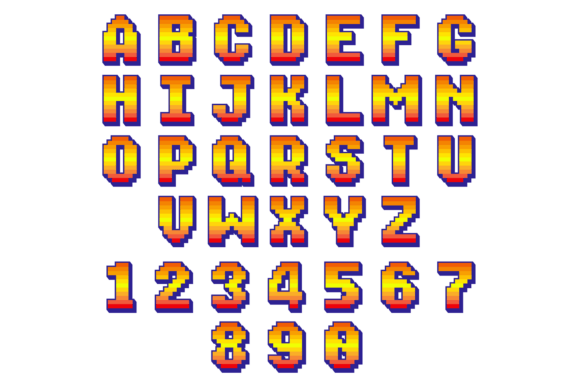
8 Bit Pixel Font: The Retro Computer Alphabet for Modern Design
There’s a certain magic in the blocky, grid-based letters of an 8 Bit Pixel Font. It’s more than just a typeface; it’s a direct visual line to the dawn of personal computing, early video games, and the nostalgic hum of a CRT monitor. This Retro Computer Alphabet isn’t trying to be sleek or ultra-modern. Its charm lies in its constraints—each character is built from a limited grid of pixels, creating a distinctive, monospaced rhythm that feels both technical and playful. The overall personality is one of authenticity and accessible nostalgia. It’s a style that immediately signals a connection to tech history, DIY creativity, and a certain kind of charming simplicity that cuts through today’s visual noise.
Where This Creative Font Truly Shines
The applications for an 8 Bit Pixel Font are surprisingly versatile, extending far beyond obvious retro-themed projects. Its strength as a display font makes it perfect for headlines, logos, and branding elements where you need instant character and memorability. Think of a indie game studio’s logo, a podcast title card, or the branding for a retro-tech blog. In logo design, it communicates a brand that is approachable, perhaps a bit nerdy, and values authenticity over polished perfection.
Beyond logos, this retro computer alphabet is a powerhouse for social media graphics and digital content. Its high-contrast, blocky forms are legible even at small sizes on a busy feed, making it ideal for quote graphics, video thumbnails, and promotional banners. For packaging design—especially for products like craft beer, artisanal snacks, or indie electronics—it adds a layer of geek-chic appeal. In editorial design, it can be used sparingly for pull quotes, chapter headings in a tech-focused magazine, or the title of a zine, injecting personality without overwhelming the body copy.
Making It Work: Pairings, Readability, and Strategy
The key to using any creative font effectively is context and pairing. An 8 Bit Pixel Font is a specialist. It excels in short bursts of large text but is not designed for long paragraphs. This is where understanding font pairing becomes crucial. For a balanced and professional layout, pair your pixel font with a clean, neutral sans serif font for body text. A simple geometric sans or even a humanist sans will provide a calm, readable counterpoint to the pixel font’s energetic display. Avoid pairing it with another strong display font, script font, or overly ornate serif font, as this will create visual chaos.
When evaluating a premium font package like this, look beyond the basic alphabet. Does it include numbers, essential punctuation, and perhaps even a set of pixel art symbols or icons? These extra design assets can dramatically increase its utility for your brand identity system. Always test the font in your specific context. Mock up a logo, a social media post, and a hypothetical website header. Check the readability at various sizes and on different backgrounds. A good pixel font will maintain its clarity even when scaled down, but testing is non-negotiable.
Practical Guidance for Your Projects
Before you commit, consider the project’s core message. Is the goal to evoke nostalgia, signal a tech-savvy audience, or simply stand out with a unique typeface? The 8 Bit Pixel Font is perfect for the first two. For the third, ensure it aligns with your overall aesthetic. It’s a fantastic tool for specific projects—think indie game interfaces, tech startup swag, event posters for a retro arcade night, or the branding for a coding bootcamp.
- Evaluate Project Fit: This font is a commercial font best suited for projects where personality trumps formality. It may not be the right choice for a law firm’s annual report, but it’s perfect for a children’s educational app about coding.
- Test Font Pairings: As mentioned, pair it with a workhorse sans serif font. For a more layered look, you could even use a simple, wide serif font for subheadings, but proceed with caution.
- Review Licensing: Ensure the font license covers your intended use, whether it’s for web design, printed merchandise, or digital products. A quality premium font will have clear licensing terms.
Ultimately, the Retro Computer Alphabet is more than a novelty. It’s a functional piece of modern typography that taps into a powerful cultural vein. Used thoughtfully, it can elevate a design from generic to genuinely memorable, creating a strong emotional connection with an audience that appreciates a nod to the digital past. It’s a tool for building a brand identity that feels both specific and deeply human. In a world of smooth gradients and infinite resolution, sometimes the most impactful choice is a deliberate, charming constraint.