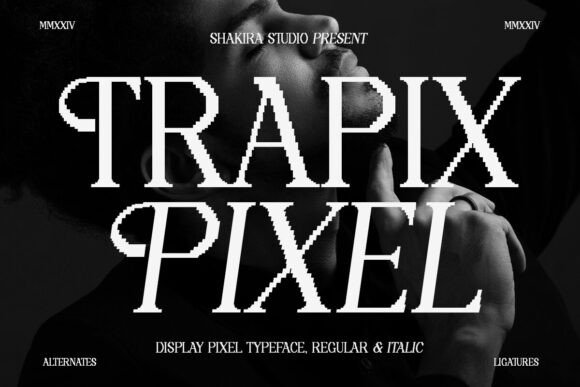
Trapix: Where Pixel Grit Meets Serif Elegance
A Typeface That Defies Simple Categories
Trapix immediately catches your eye because it refuses to fit into a single box. It’s a serif typeface, yes, but it’s built on a foundation of pixels. Think of it as the sophisticated older sibling to the classic, chunky pixel fonts of the early computing era. Instead of feeling dated, Trapix takes that blocky, digital aesthetic and refines it with the structure and elegance of a traditional serif. The result is a font with a unique personality—a retro-modern vibe that feels both nostalgic and forward-thinking. It has a distinct character that can make a design feel intentional and memorable, without relying on overly decorative or trendy styles.
What does this look like in practice? The letterforms have a subtle, grid-like quality. You might notice it in the sharp, clean terminals or the way curves are slightly simplified. Yet, it maintains the essential features of a serif: the small strokes at the ends of letters that guide the eye and add a touch of formality. This duality is its strength. It’s not a harsh, technical pixel font, nor is it a soft, traditional serif. It occupies a creative middle ground, offering a texture and visual interest that many modern typefaces lack. For a designer, this means Trapix can be the bridge between a digital-native audience and a desire for classic, readable typography.
Finding the Perfect Home for Trapix in Your Projects
Knowing where a font works is just as important as knowing what it looks like. Trapix shines in projects that need to stand out and communicate a specific kind of confident, creative energy. Its unique pixel-serif blend makes it a fantastic display font for headlines, logos, and pull quotes. Imagine it on a magazine cover for a tech or culture publication, or as the primary typeface for a branding project for a digital art studio or an indie video game company. It instantly sets a tone that’s both smart and stylish.
Beyond pure display use, Trapix is surprisingly versatile. It can bring a fresh perspective to editorial design, especially in layouts where a bold subheading can break up text and add visual rhythm. For packaging design, particularly for products like craft coffee, boutique spirits, or artisanal goods, Trapix offers a modern take on heritage. It suggests quality and craftsmanship but with a contemporary, design-savvy twist. In the digital realm, it’s excellent for creating standout social media graphics and website hero sections. It’s a premium font that can elevate a brand’s visual hierarchy, making key messages impossible to ignore.
Practical Guidance for Using Trapix Effectively
Choosing a font like Trapix is a design decision, not just a decorative one. Start by considering your project’s core personality. Is it innovative, creative, a bit retro, or premium? If so, Trapix is likely a strong candidate. Its strength lies in its ability to add character, so it’s best for projects where you want the typography itself to be part of the story.
When it comes to font pairing, Trapix does its best work alongside a clean, neutral partner. A simple, geometric sans serif font is a natural match. The sans serif handles longer body copy with clarity, while Trapix commands attention in headings. You could also pair it with a script font or a handwritten font for a more eclectic, artistic look, but use that combination sparingly to avoid visual clutter. Always test your pairings in context—see how they look on a mockup of your poster, website, or business card before committing.
Remember to review the full set of design assets included with Trapix. A well-designed creative font often comes with stylish alternates and ligatures. These are alternate versions of letters and special letter combinations that can add a layer of custom polish to your work. Using a unique alternate for a logo’s first letter or a special ligature in a headline can make your design feel truly bespoke. Finally, consider readability. While Trapix is legible at larger sizes, its pixel details may get lost in very small, long-form body text. Use it for its intended purpose: to make an impact. For body copy, stick to a highly readable serif or sans serif. And always ensure your commercial font license covers your specific use, whether for a client project, merchandise, or a large-scale print run.
Beyond Aesthetics: The Strategic Value of a Distinct Font
A typeface is a tool for brand identity. Choosing Trapix isn’t just about liking how it looks; it’s about what it communicates. In a sea of safe, minimalist sans serifs and overused classic serifs, Trapix offers differentiation. It tells your audience that you value creativity, attention to detail, and a blend of ideas. This can directly influence brand perception, positioning a brand as innovative and design-forward.
For entrepreneurs and small business owners, this can be a powerful asset. The right logo design using Trapix can become the cornerstone of a recognizable brand. Its consistent use across web design, marketing materials, and packaging design builds cohesion and professionalism. It becomes a visual signature. The font’s inherent energy can also boost audience engagement—a striking headline in Trapix is more likely to stop a scrolling thumb than a generic one. It’s a practical tool for making your work, and by extension your brand, more memorable. By making Trapix the centerpiece of a key project, you’re not just choosing a display font; you’re investing in a distinctive piece of your brand’s visual language.