Abstract Gold Futuristic Background: Modern Design Asset Guide
The Visual Language of Tomorrow, Today
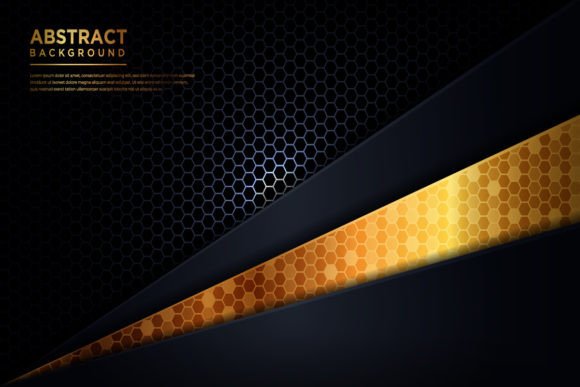
When you first encounter the Abstract Gold Futuristic Background, it immediately communicates a specific mood. This isn't just a random pattern; it's a visual statement. The core of its design is a sophisticated interplay between a dark, structured hexagon mesh and dynamic, flowing elements. Think of it as digital architecture meeting elegant motion. The dark gray or deep blue base provides a serious, professional canvas, while the sharp geometric triangles and sleek gold lines inject energy, innovation, and a touch of luxury. It’s a background that feels both technical and premium, perfectly suited for projects that need to convey forward-thinking sophistication.
The personality of this asset is confident and modern. It avoids being overly flashy or chaotic. Instead, the clean lines and deliberate color palette—where the metallic gold acts as a highlight against the cool, dark backdrop—create a sense of controlled futurism. This style resonates strongly with contemporary design trends that favor minimalism with a bold twist. It’s the kind of background that doesn’t scream for attention but commands it through its refined composition and strategic use of contrast. The overall appeal lies in its versatility; it can feel corporate and techy one moment, and luxurious and artistic the next, depending on the content you place over it.
Where This Futuristic Asset Truly Shines
Understanding the Abstract Gold Futuristic Background means knowing where to deploy it for maximum impact. Its strengths are most evident in specific, high-stakes applications.
- Brand Identity & Marketing: For startups in fintech, SaaS, AI, or blockchain, this background can form the foundation of a visual identity that feels cutting-edge and reliable. Use it on your website hero section, in pitch deck templates, or as the backdrop for social media announcement graphics. The gold accents can mirror your brand’s accent color, creating instant cohesion.
- Editorial & Publishing: Magazine covers, article headers for tech blogs, or e-book designs for business or science fiction genres gain immediate visual authority. The texture adds depth without distracting from the typography, making it an excellent partner for a strong display font or a clean sans serif font.
- Digital & Print Collateral: Think beyond the screen. This vector illustration works beautifully for event flyers, conference banners, or product packaging for high-end electronics. Its professional and clean files ensure it scales perfectly for large-format prints without losing the crispness of the hexagon mesh or the smoothness of the gold lines.
- Content Creation: Podcast cover art, YouTube channel banners, or webinar promotional graphics benefit from its engaging yet non-cluttered aesthetic. It provides a stage that makes foreground text and imagery pop, which is crucial for social media graphics where scroll-stopping power is key.
Essentially, this asset is for any project where you need to establish instant credibility and a modern edge. It’s particularly effective when you want to avoid cliché stock imagery and instead opt for a more abstract, conceptual backdrop that still feels grounded and professional.
Practical Guidance for Implementation
Simply having a great asset isn’t enough; using it effectively is what separates good design from great design. Here’s how to integrate the Abstract Gold Futuristic Background into your workflow with intention.
Evaluating Project Fit and Readability
First, assess if the asset’s personality aligns with your project’s goals. Ask: Does my message require a tone of innovation and premium quality? If you’re designing for a playful children’s brand or a rustic organic farm, this background might create a dissonant clash. However, for a tech consultancy, a law firm specializing in digital rights, or a luxury automotive brand, it’s a perfect match.
Readability is your next checkpoint. The dark base with geometric complexity can pose challenges if not handled correctly. Always test your text over the background. High-contrast colors like pure white or the gold from the palette will work best. Consider adding a subtle, semi-transparent shape or a soft gradient overlay behind text blocks to ensure your message isn’t lost in the visual texture. This is where your choice of font pairing becomes critical. A bold, geometric sans serif font for headings will complement the angular lines, while a simpler body font maintains clarity.
Leveraging the Included Design Assets
The true value of a premium font or graphic package lies in its editability. The fact that this background comes with fully editable files—including vector EPS files—is a significant advantage for any creative professional. Don’t just use it as-is. Tweak it to fit your brand identity precisely.
- Color Customization: Open the EPS in Adobe Illustrator. The RGB Color Mode is ideal for digital projects, but you can easily convert it to CMYK for print. Change the base color from dark gray to a deep navy or charcoal to better match your brand palette. Adjust the gold to a rose gold or silver to shift the mood from tech-luxury to sleek-modern.
- Element Isolation: Don’t need the entire hexagon mesh? Isolate the gold line elements or the triangle patterns to create unique dividers, icons, or accent graphics. This allows you to build a cohesive visual system around the core asset.
- Scale and Crop: The 1200×800 pixel size is a versatile starting point. For a vertical social media post, crop a compelling section. For a website background, you can often tile or strategically crop the vector to fit wider formats without quality loss.
Remember, the inclusion of free fonts in such packages is a bonus for rapid prototyping, but for final brand work, always verify the commercial license aligns with your use case. The goal is to use these design assets as a springboard for your own creative vision, not a rigid template. By actively editing and applying the principles of modern typography and visual hierarchy, you transform this abstract background from a mere decoration into a powerful tool for storytelling and engagement.